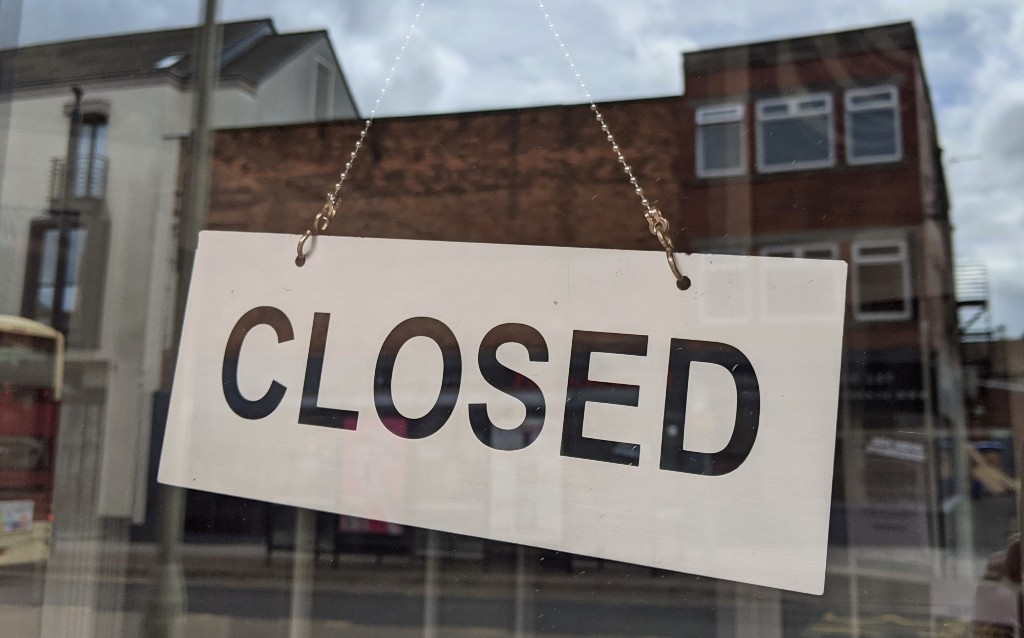
Peter Ingle looks at the impact of two sudden practice closures in the West of England
Dental practices have long been expected by the CQC to have a robust business interruption plan. NHS contracts as well as GDC standards require notice periods and arrangements to be made so that patients can have their care completed or transferred in an orderly way, if it cannot be finished by the original provider.
Despite this, the West of England has recently seen two operational ‘never events’ with a pair of practices appearing to close without notice and leaving patients, including many who are having orthodontic care under the NHS, abandoned midway in their treatment.
River Dental Group, which had been operating in two locations in Cornwall, sent out emails to some (but not all) patients, confirming its closure on 30 April.
Later there were some reports that the practice itself had not closed, but had stopped its NHS service. There has been considerable concern among patients and their families. One father who had pre-paid for his child’s private orthodontics said his daughter was stuck with an appliance that needs adjusting and was cutting into her soft tissues. Meanwhile, his other child had already had extractions pending the fitting of an NHS appliance, which it now seemed would not be forthcoming.
Other parents told local reporters that they were struggling to find alternative providers for their partially treated children, while others had received texts and emails cancelling appointments.
Before these developments there had been a three-year wait to be seen at the practices, which had been providing much of the area’s orthodontics. Another parent who was concerned about the lack of alternative providers and the likely effect on waiting lists said: ‘I think it just highlights the fragility of dental services in Cornwall and the lack of expertise for orthodontic care. I have one daughter mid-treatment with no follow-up appointment booked now, and one daughter who was expecting her braces today.’
In a later update sent to patients from the Truro branch, River Practice said: ‘We are writing to provide a brief update regarding the practice. The practice is not currently permanently closed. However, we are no longer providing NHS orthodontic services. We are currently reviewing our next steps and will provide a further update in the coming days once more information is available. If you are a private patient, please be assured we will contact you directly with further guidance shortly. We appreciate your patience and understanding.’
Cornwall Live had reported that on 30 April 30 neither practice had been taking phone calls. At that time the Truro practice was listed as permanently closed on Google, while the Penzance practice showed it as being open. By 1 May, Truro was instead listed as temporarily closed and Penzance was listed as permanently closed.
Since then, GDPUK has tried contacting the practices on three days, both by email and phone, but has yet to receive a response. Calls to the practices go directly to voicemail, and messages are not returned.
River Practice, called The River Practice Limited on Companies House, is listed as overdue on its accounts for the financial year from April 2024 to 2025. A notice for compulsory strike-off was issued on 31 March. This is the forced removal from the Companies House Register, which would result in its dissolution, but that action was suspended on 2 April.
A spokesperson for the NHS Cornwall and Isles of Scilly Integrated Care System (ICS) said: ‘The NHS orthodontic service at River Practice has now closed, and appointments at this practice will no longer take place. Our immediate priority is to ensure that NHS patients from this practice can continue to access urgent NHS orthodontic care with an alternative provider. Patients already in active treatment are being prioritised first.
‘We are currently working with other NHS orthodontic providers to put alternative arrangements in place so that continuous orthodontic provision remains available locally for those impacted NHS patients. We understand this may be worrying for patients and we would like to thank them for their patience while alternative arrangements are put in place.’
The ICS website has a page devoted to the closures, last updated on 1 May. Along with the information above there is an online form for affected patients. This may reflect the ICS being unable at this time to access information about patients under treatment from the practices.
In a section headed timeframes the ICS admit that ‘it may take some time before we come back to you’.
However uncertain things may look for the practices’ NHS patients, the outlook for those who were being seen privately is, if anything, bleaker. The ICS offer the following comments: ‘NHS Cornwall and Isles of Scilly Integrated Care Board commissions NHS services only and is not able to comment on or advise in relation to private treatment arrangements. If you are receiving private care, you should contact your provider directly.’