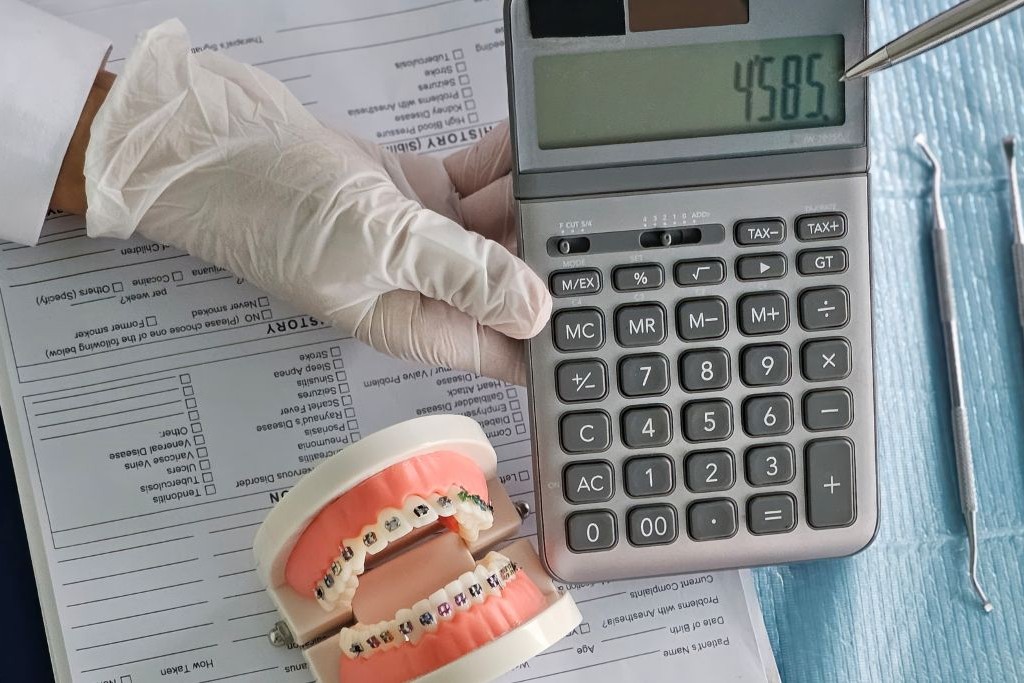
Around 55% of treatment plans are never carried out, which could be losing your practice thousands of pounds. But there are easy ways of converting these to generate income, advises Simran Juneja
Most practice owners can tell you their monthly gross to the nearest thousand. Very few can tell you what plans they presented to patients and did not convert. That second number is usually the bigger one.
Henry Schein One's 2026 Catalyst Index puts the average case acceptance rate at 45%. Put the other way round, 55% of presented treatment never goes ahead. The top 10% of practices in the same dataset accept 75%. The data is drawn largely from US practices, so treat it as a benchmark rather than a verdict. Even so, every UK owner I have spoken to recognises the shape of it: a full book, a busy diary, and a drawer of plans that quietly went nowhere.
So what does that gap actually cost? Let's work it through properly.
A worked example
Take a fairly typical mixed two-surgery practice. Round, conservative numbers; swap in your own.
- Each surgery presents 10 plans a week with a private element (crowns, implants, aligners, whitening, extended hygiene courses).
- The average plan value is £900.
- The practice works 46 weeks a year.
- That is 920 plans a year, worth £828,000 in presented treatment.
- At 45% acceptance, £372,600 of that goes ahead - £455,400 does not.
Now move acceptance up by ten points, from 45% to 55%. That is not top-decile performance. It is simply a practice moving from average to slightly better than average. The extra accepted treatment is £82,800 a year.
At 75%, the top-10% figure, the extra is £248,400.
Gross is not profit, so here is the profit
Assume most of that extra treatment is delivered by associates on a 50% split, and that lab fees and materials take around 12% of the fee. The practice keeps roughly 38p of every extra pound.
Crucially, almost nothing else moves. Rent, rates, reception wages, nurse salaries, compliance, software and the marketing that brought the patient in are already paid. The patient has already been examined and diagnosed. The cost of acquiring that opportunity has been spent.
On the ten-point scenario, that is around £31,500 a year added to profit. On the top-decile scenario, it is around £94,000.
There is a second effect owners rarely price in. Practices are bought and sold on a multiple of profit. If your practice would sell at six times EBITDA, that £31,500 adds close to £190,000 to its value. Improving acceptance is one of the few levers that grows income this year and the exit value at the same time.
One caveat. If your diary is already full for eight weeks, extra acceptance creates a capacity question before it creates profit. That is a good problem, and it usually points to hygiene, therapist or associate hours as the next investment.
Why plans stall
In my experience, very few plans are lost in the surgery. The clinical explanation is usually good. Plans are lost in the 48 hours after the patient leaves.
The patient cannot remember why it matters. In the chair, the crown made complete sense. At home that evening, it is a number on a printout with clinical terms they cannot explain to anyone.
The real decision-maker was not in the room. A partner, a parent or an adult child often has a say in anything over a few hundred pounds. They heard none of the explanation and all of the price.
The total feels bigger than it is. £3,200 on a single line reads very differently from a monthly figure that sits alongside a phone contract. Where finance is offered properly and compliantly, simply showing both figures changes how the decision feels.
Nobody owns the follow-up. This is the big one. The dentist assumes reception will call. Reception assumes the dentist will mention it at the next check-up. The patient assumes no news means it was not urgent. Six months later, the plan is a recall conversation rather than a booked course.
What the better practices do differently
The practices I see closing the gap tend to do five things consistently.
- They measure it. Every plan logged with a value and a date, and a simple monthly report: presented, accepted within 90 days, outstanding. Ideally by clinician, because the spread between clinicians in the same building is often wider than the spread between practices.
- They give the patient something to take home, and something to watch. A plain-English summary of the problem, the options and the cost, sent with a short video of the clinician explaining the plan. The patient can replay it that evening and share it, so the person they decide with hears the explanation, not just the price.
- They show the monthly figure next to the total. Where finance is available, and always within the FCA rules, it is presented as an option rather than a sales line.
- They give every open plan a named owner. One person, usually a treatment coordinator or a trained receptionist, is responsible for each plan until it becomes a booking or a clear no.
- They follow up on a schedule, not a feeling. A call or message within two days, another within a week, and a final check at a month. Patients rarely say no. They mostly just drift, and a well-timed, helpful follow-up is often all it takes.
Now, a lot of this legwork can now be run by AI agents working alongside the practice team, rather than depending on a busy receptionist to remember.
Start with one number
If you take one thing from this, make it the measurement. Pull every plan presented in the last three months, total the value, and check how much has been booked. Most owners who do this exercise for the first time are surprised by the figure, and that surprise is usually the start of the most profitable project the practice runs all year.
The treatment has already been diagnosed. The patient has already trusted you enough to sit in the chair. The opportunity is simply making sure the plan does not stall on the way home.
Simran Juneja is co-founder of AltaDent Growth, which works with independent practices on the journey from enquiry to accepted treatment, and a founding partner at Face Teeth Smile Dental Clinics.