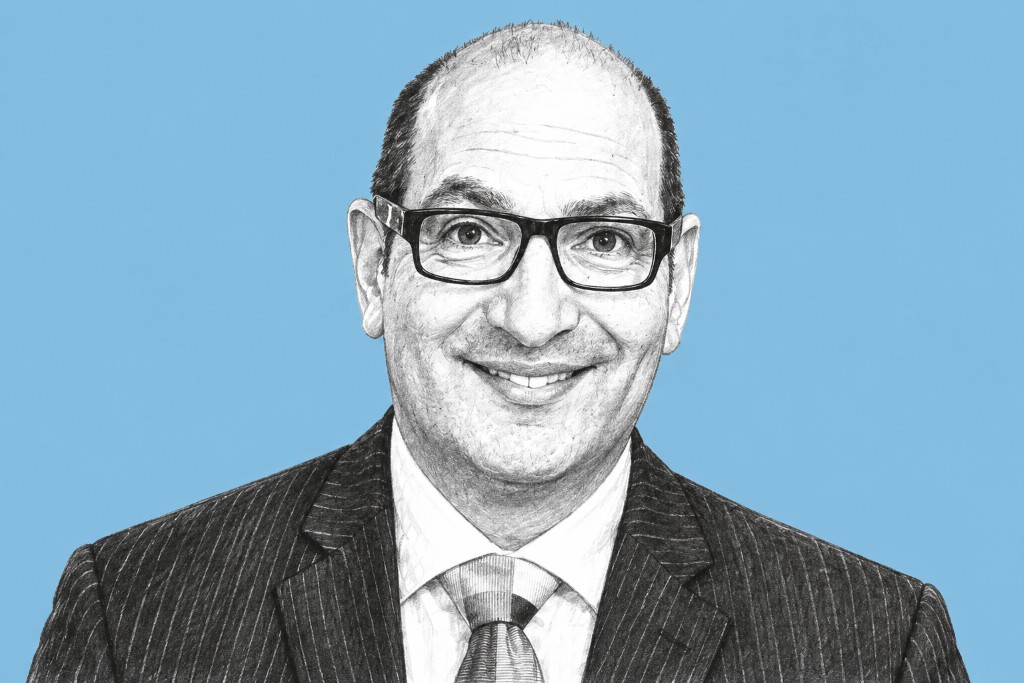
GDPUK founder Dr Tony Jacobs envisages a practice run by AI - but those that retain more human judgement may have the upper hand
For several years now, AI has been quietly entering dentistry through website chatbots that answer routine questions, collect contact details and book appointments. The technology was initially viewed as little more than an automated FAQ system. Today, however, we are witnessing the emergence of much more sophisticated AI agents capable of handling administrative workflows, patient communication, triage, scheduling and marketing. AI is increasingly being promoted not as a tool, but as a member of the dental team.
It is not difficult to imagine the next stage.
A patient enters a practice and instead of approaching a traditional reception desk, they interact with a welcoming screen, or even a robot. The AI already knows who they are, confirms their appointment, updates medical history records and answers basic questions. It may even recognise anxiety signals in speech or facial expression and tailor its responses accordingly.
At first, such systems will probably be introduced gradually. Most patients still value human contact. Yet self-checkout technology in supermarkets teaches an important lesson: what initially feels strange can quickly become normal.
Beyond reception, AI is already moving into areas once regarded as distinctly human. Automated follow-up systems can contact patients after treatment, encourage attendance at recalls, and request online reviews. Unsurprisingly, many are designed to channel satisfied patients towards public review platforms while directing dissatisfied patients into private feedback pathways. One might cynically observe that AI has become remarkably skilled at herding five-star reviews into the correct social enclosure.
Meanwhile, specialised AI sales agents are appearing that can answer treatment enquiries, explain finance options, nurture leads and follow up patients who have not yet committed to treatment. In theory, they never get tired, never forget a callback and never have a bad day.
But would I trust a complete suite of AI products running a practice?
Probably not.
The problem is not intelligence. The problem is judgement.
A practice may deploy separate AIs for reception, marketing, treatment coordination, review management, compliance and clinical support. Individually they may perform well. Collectively they risk becoming a digital version of the old management problem: everybody is busy but who is actually in charge?
The future may therefore require a new role—the AI manager. Instead of supervising staff, the practice owner may find themselves supervising algorithms, monitoring outputs, correcting errors and ensuring that commercial objectives do not override professional ethics.
Could AI reduce headcount? Almost certainly. Administrative functions are the most vulnerable. A practice that once required several full-time reception and coordination roles may eventually require fewer people.
Yet dentistry remains a profoundly human profession. Patients do not simply purchase treatment; they seek reassurance, empathy and trust. AI may answer the phone, book the appointment and request the review. But when a nervous patient sits in the chair and asks the questions we anticipate, “Will this hurt?”, “how will it feel tomorrow?” many of us suspect that a compassionate human voice will retain a value that no algorithm can fully replicate.
The real question may not be whether AI replaces dental staff. It may be whether the practices that successfully combine human judgement with artificial intelligence gain an overwhelming advantage over those that do not. The future receptionist may be artificial. The future practice manager may supervise machines as much as people. But for the foreseeable future, somebody will still need to manage the managers—even when the managers are algorithms.