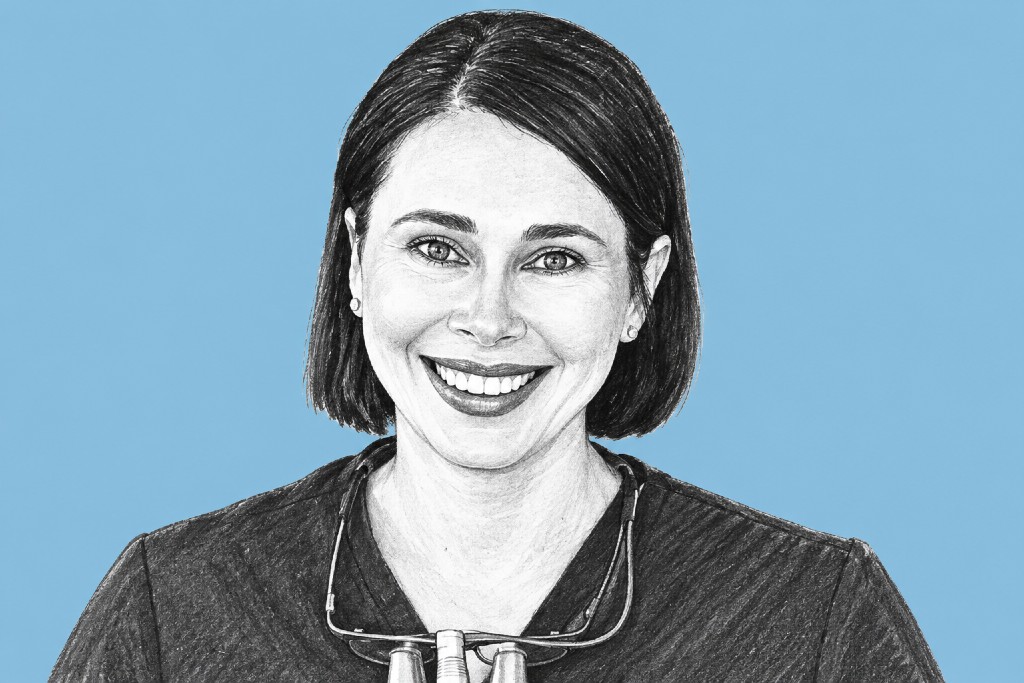
Dr Kat O’Kill, a joint winner of GDPUK’s writing competition, continues where she left over – looking at how communication is the most vital skill in a dentist’s repertoire
I love technology and continuing education, and I learn regularly from specialists in tissue sculpting, biomimetic dentistry, and digital scanning. Fifteen years in, and I am still learning, partly because as a general dentist I never quite know what will walk through the door next.
But the single thing that has made me a more successful clinician, more than any course or piece of equipment, is learning to talk to my patients properly. Patients who understand you trust you, and patients who trust you refer the people they love. My preferred method is the GLOW Technique. Ground the room. Use Lay language. Offer a path, not a menu. Write it down. Yet simple is not the same as easy. So what does this look like on an ordinary Tuesday morning?
My nine o'clock
I saw her for a consultation two years ago. She understood everything, had a clear plan, and then went elsewhere because it was cheaper. Entirely her right. She came back a few weeks ago, ashamed, because things had not gone well wherever she ended up. I have no interest in blaming the other dentist, whose judgement I was not there to see. What I could do was start again, as though the last two years had not happened.
A patient who is ashamed cannot listen properly, and a patient who cannot listen cannot consent to anything meaningful. So before any examination began, I grounded the room, the G in GLOW. I told her there was nothing to apologise for, that choosing on price was entirely reasonable with the information she had at the time. I slowed my own breathing first, because patients feel that immediately, and said some version of ‘let's forget what happened and take a calm look together now’. It took thirty seconds, and it decided whether the appointment felt like a fresh start or a continuation of her shame.
Once the room was settled, I watched for the point where technical language starts working against me. That is lay language, the L, nothing more than saying things the way a patient would describe them to their own partner. A periapical radiolucency becomes a shadow around the root tip. I described what I was seeing the way I would to a friend, not a referral letter, and the moment I did, she re-entered the conversation.
Then came the point where most consultations quietly go wrong, the moment a dentist reaches for a menu instead of a path. I didn't compare every option, and I didn't ask her to relive what had happened elsewhere. Too many options create paralysis, and she wanted direction, not another catalogue. I gave her one coherent pathway, the O in GLOW, built around where she was now, not where she had been.
After the consultation
The last letter, W, is the part almost no patient ever sees, and it is where the real evidence lives. I dictate a written plan, AI structures the draft, and I review and approve every word before it reaches a patient, emailed with a plain summary of what we discussed so she can read it calmly at home rather than reconstructing it from memory.
A few days later comes a follow-up call. Once patients have had time to read their treatment plan, speak to their loved ones and properly think about the time and money involved, they often feel much more comfortable asking the straightforward questions they didn’t ask during the consultation. In this patient’s case, she still didn’t really understand why I was recommending fairly extensive gum treatment before starting any restorative work. We had discussed her gums during the consultation, but she told me that no other dental practice had raised this with her, so naturally she questioned why it was necessary. She then asked whether her husband could come with her for another consultation so that we could sit down together and go through the plan again.
And of course he could. For me, that second conversation isn’t a failure of the first consultation. It’s part of informed decision-making. I would much rather explain the same treatment plan twice than have a patient agree to it once without really understanding it.
There are ways in which this approach falls short. A proper plan still takes time, and on a day with two or three new patients, I cannot send it immediately. It usually takes a couple of days, often written in the evening. Not something I am proud of, but it is better than nothing - a patient who receives a written plan and one who never does are two completely different creatures.
Has it worked? Since I changed the structure of my consultations, mid-treatment dropout has noticeably fallen, and most patients who delay do eventually return. A patient who understands you will trust you, and a patient who trusts you will come back.
GLOW answers how a conversation goes well. It does not answer the harder question behind it: what happens when the dentistry itself is excellent, and the patient still leaves unhappy, including the money conversation none of us were properly taught to have. That is where I want to go next.
GLOW is not a finished answer, just what I have built so far. Try grounding the room tomorrow, even just for thirty seconds, and let me know what you notice.
Dr Kateryna O'Kill writes for colleagues on LinkedIn and for patients on Instagram at @dr_kat_okill