The Government must improve access to NHS dentistry to help detect mouth cancer earlier, according to a new report from the Oral Health Foundation (OHF).
The OHF highlights NHS England figures showing a 40% increase in mouth cancer diagnoses over the past decade, from 6,908 in 2014 to 9,673 in 2024.
Across the UK, 3,650 people died from the disease in 2024, equivalent to ten deaths a day.
Published during November’s Mouth Cancer Action Month, the report, Tobacco, Alcohol, HPV: Closing the Risk Factor Gap, sets out 11 priorities covering prevention, earlier diagnosis and support after treatment.
The charity said better dental access would allow people at higher risk to receive advice and have worrying changes checked promptly.
It also wants sustained funding for smoking cessation services and catch-up HPV vaccination for young people who have missed out.
Dr Rachael England, head of policy and advocacy at the OHF, said: ‘Rising mouth cancer cases demand stronger action on tobacco, alcohol and HPV. Telling people about the risks is not enough if they cannot get the support they need.
‘People need practical help to stop using tobacco, stronger alcohol policies and accessible HPV vaccination. They also need timely access to a dentist or doctor when they notice a worrying change in their mouth.’
The report urges routine mouth checks for higher-risk adults, greater transparency on referral delays and a named government lead for mouth cancer prevention.
The OHF is working with the Faculty of Dental Surgery, British Dental Association (BDA) and British Association of Oral and Maxillofacial Surgeons to improve referral routes and coordination for patients with suspected mouth cancer.
The charity said fewer than half of adults knew that dentists check for mouth cancer during routine examinations.
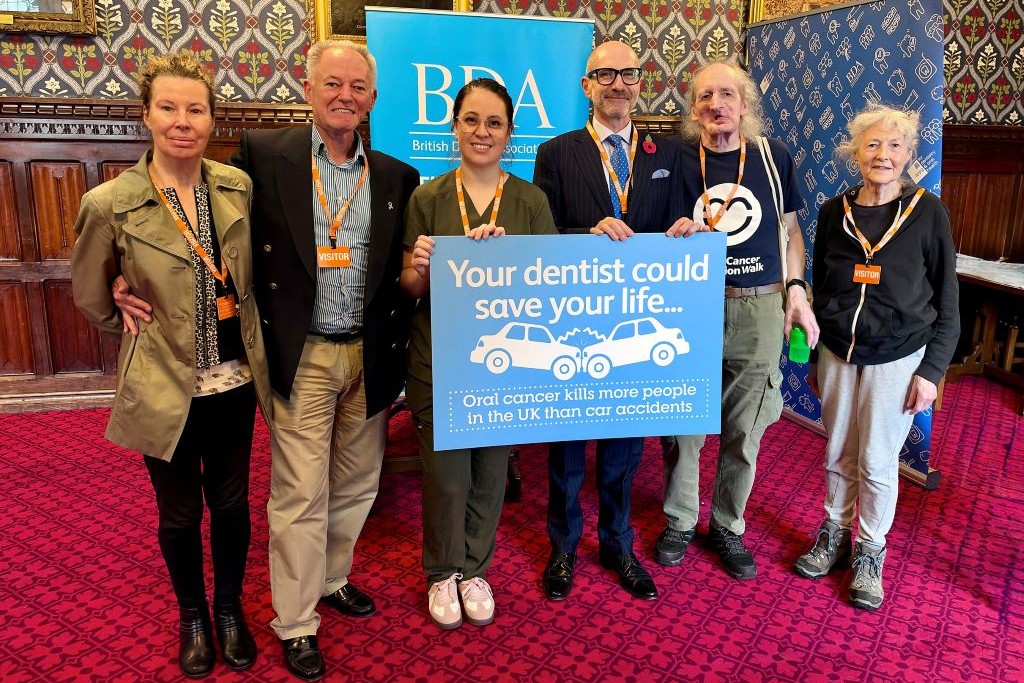
The BDA has separately highlighted the importance of early detection by providing oral cancer screenings for MPs and peers.
The association warned that more people in the UK die from oral cancer each year than from cervical and testicular cancers combined, and that difficulties accessing NHS dentistry could mean missed opportunities to identify the disease.
It cited figures showing that more than 85% of patients diagnosed with stage 1 oral cavity cancer in England survive for at least five years, compared with 35% of those diagnosed at stage 4.
The BDA, which was part of the coalition that secured the extension of HPV vaccination to boys, also raised concern about low uptake.
HPV causes around 70% of oropharyngeal cancers, but vaccination uptake among Year 8 pupils in England was just 71.7% for girls and 67% for boys in 2024/25, compared with a pre-pandemic level of around 90% for girls.
BDA board member Jason Stokes said: ‘Nothing spells out why dentistry isn’t an optional extra more than oral cancer.
‘This condition claims more lives than car accidents, and early detection is so key.
‘Dentistry must not be reduced to an accident and emergency service, or one of the first casualties will be oral cancer screening and the benefit this brings.’
Fellow board member Natalie Bradley, who carried out the screenings for MPs and peers, said: ‘Almost every colleague will have spotted the tell-tale signs at a check-up.
‘We have a simple message for MPs. The fact is oral cancer can be a killer, and your dentist could save your life.’