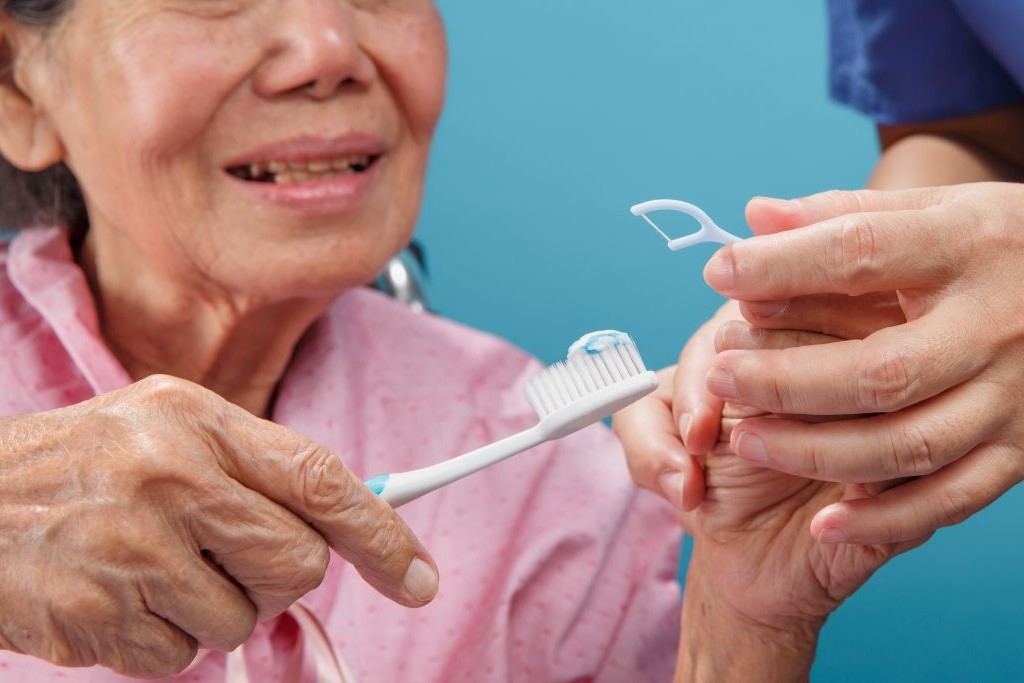
Care home residents face avoidable pain, infection and difficulties eating without consistent daily oral health support and reliable access to dental treatment, Care England has warned.
In a new policy white paper, the national body calls for a national programme to improve oral health in care homes, with coordinated action from government, NHS commissioners, dental services and care providers.
The report – Improving Oral Health Outcomes for Care Home Residents: A policy white paper and good practice guide for England – builds on findings from the Care Quality Commission’s (CQC) Smiling Matters reports, which identified worsening access to NHS dentistry despite improvements in oral health awareness, assessments and staff training.
In the CQC’s 2023 progress report, 25% of care providers responding in 2022 said residents could never access NHS dental care, compared with 6% in the earlier review.
Care England said poor oral health could affect residents’ ability to eat, maintain their weight and enjoy a good quality of life, while also being associated with aspiration pneumonia.
Professor Martin Green, chief executive of Care England, said: ‘A care home can help someone brush their teeth; it cannot fix gaps in NHS dentistry.
‘We cannot ask providers to take responsibility for daily oral care while leaving residents without a reliable route to professional treatment.
‘Oral health is about whether someone can eat comfortably, speak, smile and live without pain. It is not an optional extra.’
The report calls for the Department of Health and Social Care and NHS England to lead a national programme to implement oral health guidance in care homes.
It also says every integrated care board (ICB) should publish a dental access plan for care home residents, covering treatment in the home and routes for urgent referral.
Other recommendations include funded staff training with protected time, integrating oral health with nutrition and hydration, aligning commissioning and regulatory expectations and improving data collection on dental access and outcomes.
Care England pointed to existing national programmes in Wales and Scotland – Gwên am Byth and Caring for Smiles – as examples of coordinated approaches to improving oral health in care homes.
Alongside the white paper, Care England has launched a practical toolkit.
Both were developed with Professor Georgios Tsakos, Professor Paul Brocklehurst and Professor Gerry McKenna, drawing on research funded by the National Institute for Health and Care Research (NIHR).
The resources include a research summary, practical guide, explainer animation and interactive staff guide, alongside existing oral health assessment, care-planning and training materials.
They set out five steps for care teams: raising awareness; providing training and time; establishing daily mouth-care routines; maintaining useful records; and reviewing progress.
The resources are intended to support existing National Institute for Health and Care Excellence (NICE) guidance and professional advice rather than replace them, Care England said.
Professor Tsakos of University College London said: ‘Staff need usable tools, confidence and time, and visiting dental teams need to work alongside everyday care rather than be seen as a replacement for it.
‘Working with Care England has helped us translate the research into resources that care teams can understand and use.
‘We want these materials to support conversations between residents, families, care staff and dental professionals, and help homes review what they can improve.’