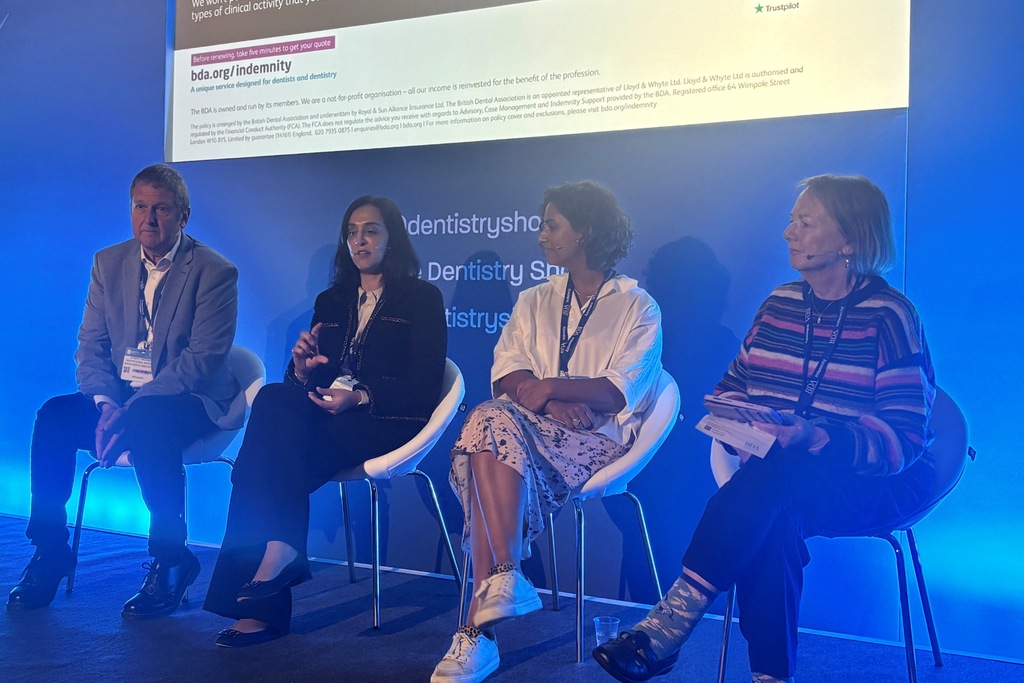
Social media and influencers are fuelling a rise in complaints against dentists, dento-legal advisors told the Dentistry Show in London on Friday 9 October.
They say patients are requesting treatments which they’ve seen on Instagram which are 'not very realistic' and their own dentists have 'never actually considered'.
This can lead to a mismatch between patients’ expectations and the feasibility of what dentists can do, they warned.
Dr Kasha Soni, dento-legal advisor at the British Dental Association, told a panel discussion how the source of complaints had changed 'significantly' in recent years, partly due to the growing popularity of social media and influencers.
She said: 'The nature of claims and the types of claims have certainly changed over the years. Historically, most of the common cases that we see would be perio-based, particularly with the long-term mismanagement of perio conditions.
'But this has changed significantly, and one of the factors behind this is the rise in social media and influencers. So dentists are now finding them that they're being approached by patients requesting dental treatment that they've never actually considered for the patient before.
'The fundamentals are really unchanged, and that is just working, making sure that we're working for the key in the key interest, the best interest of the patient, and making sure that the patient expectations and clinical discussions are all being had, and making sure that the actual patients are appropriately being consented beforehand.'
Dr Bindiya Thakrar, also a dento-legal advisor at the BDA, explained how Instagram was giving patients 'unrealistic' expectations.
She told the panel: 'You go through it. You have something in your mind, the patient has something completely different. Usually, if it's something that they've researched before, it might be that they've looked at lots of Instagram pictures, which, as we know, sometimes are not very realistic. They don't always cover the backstory.
'So usually, when we get involved, sort of towards the end of that, the conversation that we're having with the dentist is: "Did you discuss the expectations? Did you fully understand what they wanted? Did you have that discussion in the consent process? Did you document all of that information?" Usually, it's just that their expectations are here, and what you can realistically provide is usually somewhere else.”
Research published in Nature’s Scientific Reports journal in September 2024 found that 30% of participants believed social media had affected their decision to have cosmetic dental treatment. Most of the participants said they were following the accounts of dentists or dental clinics and had been persuaded to have procedures including orthodontics and teeth whitening.
Although social media is making patients more informed, Dr Thakrar told the panel that dental professionals must not forget the 'huge knowledge gap' and that they are always the 'expert in the room'.
'Actually, a lot of patients we're seeing now are armed with a lot of information, and then they come to the practice and they're asking for things, but the same principle still applies. You have to you have to remember that there is a knowledge gap. You know, whatever they've Googled, whatever AI's told them, you still have access to more information.
'Just because they've Googled it does not mean that they are an expert on what they're asking you. You are the expert in the room.'