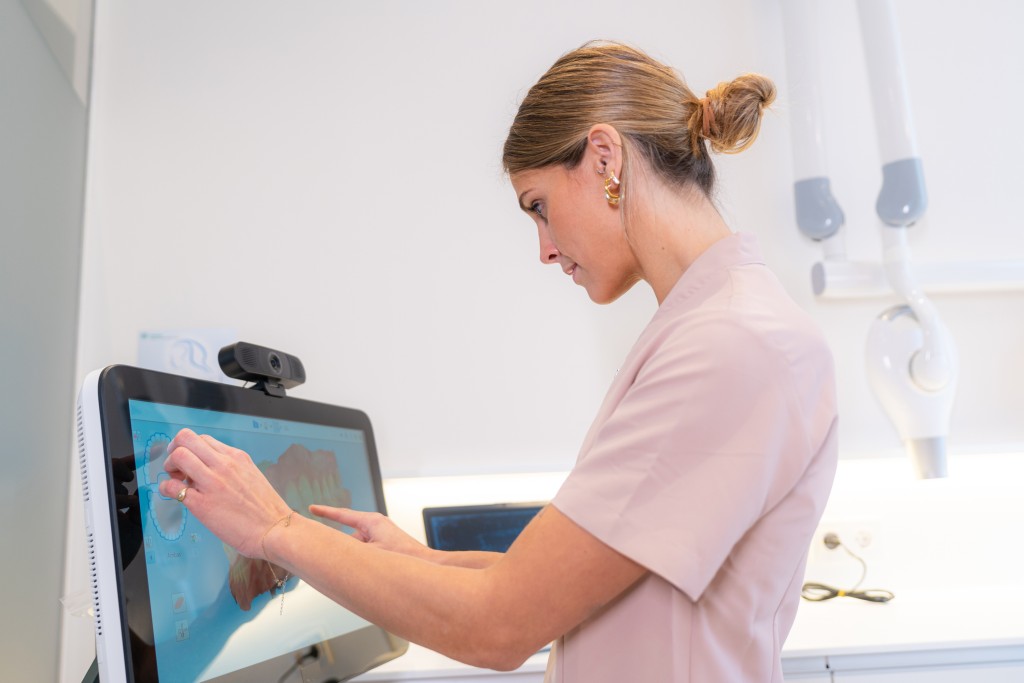
Dentists surveyed for a new study were largely willing to use artificial intelligence (AI) to help identify potentially malignant oral lesions, even though most had no formal training in oral cancer screening.
The study, by Professor Dalia Ghalwash of the British University in Egypt and published in Scientific Reports, used a questionnaire to survey 500 practising dentists in Egypt about AI-assisted decision support for detecting oral potentially malignant disorders (OPMDs) – lesions such as leukoplakia, erythroplakia and oral lichen planus that carry a risk of developing into oral cancer.
However, Professor Ghalwash cautioned about applying the results to other healthcare systems outside of Egypt.
On a five-point scale running from ‘strongly disagree’ to ‘strongly agree’, the dentists’ intention to use AI averaged 3.92 – close to ‘agree’.
Their overall attitude towards AI was found to be the factor most closely linked to that intention, and it scored higher still, at 4.05.
Their ratings of AI’s usefulness averaged 3.84, while trust in the technology and readiness to let it inform clinical decisions scored 3.68 and 3.69 respectively. AI’s ease of use scored lowest among all the measures, at 3.52.
Only 26% of respondents had received formal training in oral cancer screening, while familiarity with AI technologies was generally moderate.
However, the dentists showed a strong appetite for learning about AI, giving an average score of 4.12 out of five when asked whether they intended to seek training to improve their ability to use it.
The study noted that early OPMDs can have subtle or non-specific features that make them difficult to distinguish from benign lesions, and dentists are often the first healthcare professionals to see them during routine examinations.
The paper also highlighted that AI tools trained on clinical images have shown promise in detecting and classifying oral lesions, but their use in routine dental practice remains limited.
Professor Ghalwash said AI analysis of intraoral photographs and other clinical data could support screening during routine dental examinations, helping dentists recognise suspicious lesions, assess their potential risk and make more consistent decisions about referrals and biopsies.
However, she emphasised that the technology should complement rather than replace clinical examinations, professional judgement and histopathological confirmation where required.
Integrating AI into existing clinical workflows and concerns about increased workload were among the most frequently reported barriers to implementation in the research.
The study also highlighted the importance of developing AI systems that can be integrated into dental records, imaging platforms and referral pathways without increasing consultation times or administrative demands.
Professor Ghalwash concluded: 'Egyptian dentists showed favourable behavioural intention toward AI-assisted decision support for OPMD detection and assessment. Perceived usefulness, trust, attitude, and reliance on AI-assisted clinical decisions were significantly associated with behavioral intention within the proposed TAM framework. These findings reflect stated behavioral intention rather than actual clinical use and do not establish causal relationships.
'Translation into practice will require externally validated and explainable AI systems, prospective real-world evaluation, clinician education, appropriate workflow integration, and clear regulatory and professional accountability. AI should currently be regarded as a supplementary decision-support tool under appropriate human clinical oversight, rather than as a replacement for professional judgment or a definitive diagnostic tool.'