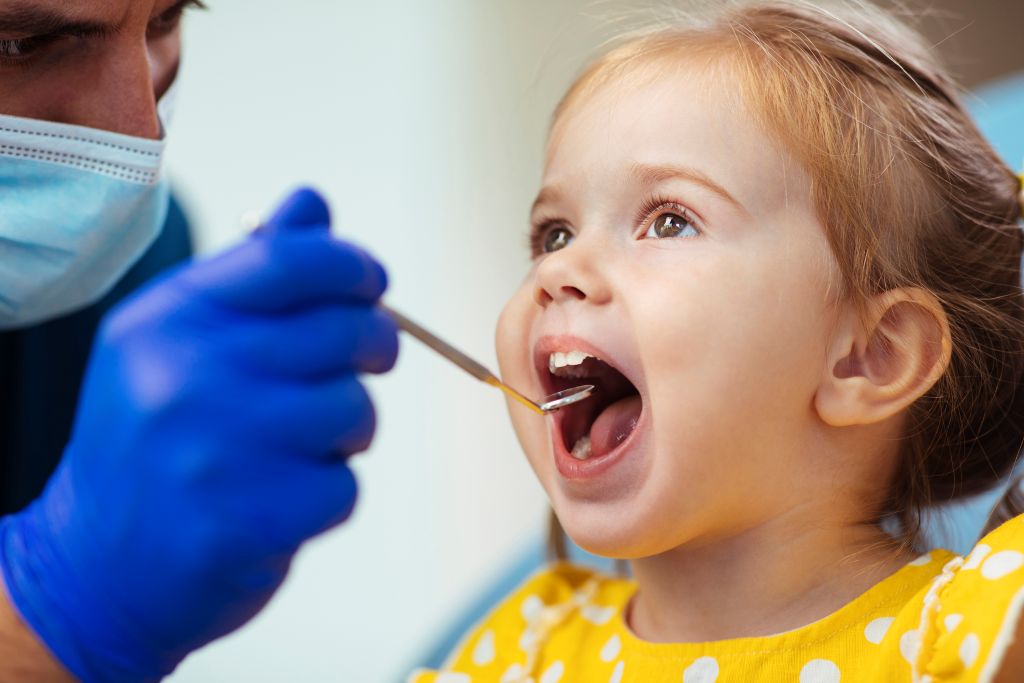
NHS England’s updated children’s dental care standard creates a new ‘enhanced primary care’ tier, aiming to keep more paediatric cases in primary care and reduce unnecessary specialist referrals - but delivery will depend on workforce, funding and system support, said the British Society of Paediatric Dentistry (BSPD).
The clinical standard for oral health and dental care for children and young people supersedes the 2018 standard and introduces a five-level model of care, setting out how children's dental services should be delivered from a child's first dental visit through to specialist treatment.
Developed by the BSPD in collaboration with the Office of the Chief Dental Officer for England, this replaces the previous three-tier structure with clearer expectations on workforce, facilities, governance and performance data.
Among the key changes is the introduction of a new Level 1b 'enhanced primary care' tier, designed to enable more children to be treated safely in primary care by dental professionals with additional training, reducing unnecessary referrals and easing pressure on specialist services.
The standard also places paediatric dentistry within integrated neighbourhood teams for the first time, with services expected to work alongside health visitors, school nurses, GPs, paediatricians, early years providers and social care.
Included for the first time is national guidance on the role of dental therapists working in general anaesthetic settings, defining their scope of practice, supervision and governance.
Among the other measures is the introduction of standardised referral criteria and complexity scoring for Level 2 services using the BDA Case Mix Tool, together with recommended performance standards covering trauma response times, waiting times, general anaesthetic activity, patient-reported outcome measures and monitoring of children who were not brought to appointments.
The framework also strengthens safeguarding requirements, aligning them with the 2026 Working Together to Safeguard Children guidance and identifying missed appointments as a potential safeguarding concern.
Dr Oosh Devalia OBE, president of the BSPD, said: ‘This standard is a pivotal moment for children's oral health in England.
‘For the first time, we have a single, coherent national document that supports every professional, from a newly qualified dentist in general practice to a consultant leading a tertiary team.
‘It sets the benchmark not just for clinical care, but for equity, safety and accountability.’
Under the new standard, structured preventive interventions are required at every dental contact, including when children are treated under general anaesthetic.
The guidance additionally calls for services to collect and stratify data by deprivation, ethnicity, disability and looked-after child status to help commissioners identify and address inequalities in access to care and clinical outcomes.
Dr Devalia added: ‘Children deserve dental services that are joined up, accessible and safe, wherever they live.
‘This standard gives commissioners, managed clinical networks and providers the clearest possible picture of what that looks like.
‘We now need to see it implemented consistently, with the workforce, funding and system support to make it real.’