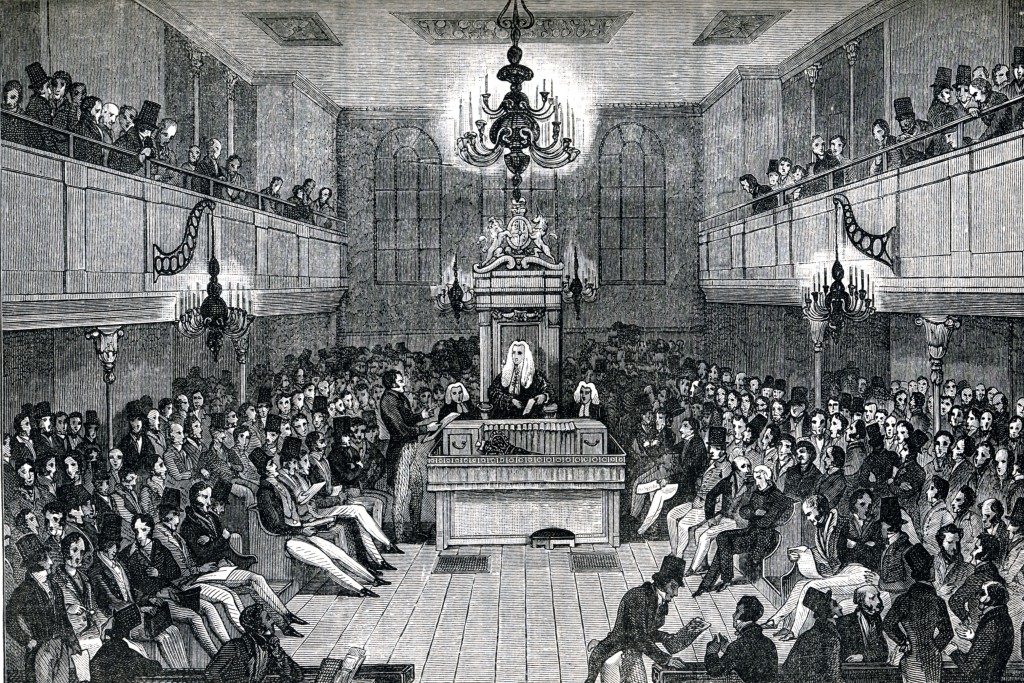
There were a couple of discussions in the House of Commons last month on dentistry, providing an insight on what the Government may be considering as priorities. Sarina Salamon summarises what was said
Dentistry rarely gets its moment in the sun – or in the House of Commons. Yet in June, it was debated not once but twice – one as a Commons debate on 15 June, and in Westminster Hall the following day, nominally on services in West Sussex, but in reality covering the whole country. Significantly, primary care minister Stephen Kinnock was in attendance for both debates.
As you can imagine, there was nothing revealed that dentists wouldn’t already know. But it provided an insight into what our lawmakers consider to be the biggest issues in dentistry. Of course, it mainly focused on NHS services, but it may have implications for all dentists. We go through the talking points subject by subject.
NHS contract reform
‘We are all seeing scenes that we would expect to read about in a Charles Dickens novel, not read about in the news.’ That was how Adam Dance, the Liberal Democrat MP from Yeovil, described dentistry in his speech opening the debate in the Commons on 15 June. Meanwhile, In the Westminster Hall debate, Jess Brown Fuller, Liberal Democrat MP for Chichester, said a dental nurse had described the contracts as like ‘tying dentists’ hands behind their backs.’
All members were unanimous in the need for NHS dental contract reform. The 2006 contract was criticised by all those who spoke, specifically the current Units of Dental Activity (UDA) system which is ‘fundamentally misaligned with clinical reality’ according to Conservative MP Gregory Stafford. UDAs were stifling preventative dentistry, they found. Green Party MP Adrian Ramsay said tooth decay is the leading cause of hospital admissions for five to nine year olds and the lack of access to NHS dentists has seen an increasing number of children go without routine treatments.
While they were on the same page as dentists with regard to UDAs, the MPs on the whole welcomed the recent changes to urgent care appointments. But they were in agreement with the profession in that small tweaks to the current system were thought insufficient.
They said that tooth brushing schemes and school visits are positive steps in children's dental care, but added that the need for an overhaul of NHS dentistry focussed on prevention was a shared sentiment among MPs.
Perhaps the most radical solution for contract reform came from a Northern Ireland MP - Jim Shannon, the DUP representative for Strangford: ‘I think that perhaps we should move back to the situation I can well remember in the past, when there were full-time NHS dental surgeries in community hospitals. They never let us down. Those positions must pay enough for dentists to be comfortable. Is that perhaps where we are going?’ We can probably say that this is unlikely, Mr Shannon.
Growing dental deserts
‘The phrases “dental desert” and “DIY dentistry” are becoming so normalised that it is easy to forget the human cost behind those terms,’ said Helen Maguire, the Liberal Democrat MP for Epsom and Ewell. She was right, the two phrases were used all too frequently in both debates.
She went on to describe a dentist in her constituency whose patient had performed his own dentistry and ‘resorted to using a pair of pliers to extract teeth, filing down the sharp edges of a broken tooth, and even purchasing temporary dental cement to try to fill an open cavity.’
The increase in DIY dentistry is telling of the growing dental deserts. Asides from more distressing stories of patients performing their own medical procedures, ministers across parties also detailed their constituents' marathon journeys just to reach an NHS practitioner.
During the Westminster Hall debate, Ben Maguire, Liberal Democrat MP for North Cornwall said: ‘Some of my residents still travel to their NHS dentist clinic in Nottinghamshire, which is a more than 500-mile round trip from Cornwall.’
In the Commons, Greggory Stafford reminded those present of Covid’s impact. He said: ’We have to remember that around 4 million adults struggled to access dental care before Covid, and that figure has now risen to nearly 14 million.’
The pandemic’s contribution in the creation of dental deserts was also brought to the fore by Jessica Brown Fuller, LDMP for Chichester, who said: ‘A number of individuals told me that they had been removed from their surgery’s patient list, particularly during the pandemic when they did not want to be in close contact with others.”
Stafford went on to describe the government's response since as ‘piecemeal’ and underscore how rural and coastal communities are particularly badly affected, with some having as few as 10 NHS dental practices per 100,000 people.
He said: 'These so-called dental deserts are not accidental, but the predictable outcome of a system that does not align funding, workforce planning and local need.’
Workforce deployment
‘Dentists do not grow on trees,’ said Adrain Ramsay, one of many MPs to bring up problems in training new dentists and the inefficient deployment of the current dental workforce.
In the Commons, he continued, ‘I am delighted that, following many conversations, the University of East Anglia will begin training students from 2027. However, the truth is that, at UEA and nationally, not enough funded places are being provided.’
Amanda Hack, MP for North West Leicestershire, spoke on the inefficient use of already present resources, specifically the underutilisation of dental therapists. She said: ‘We do not have a lack of talent; we have a failure of deployment. Dental therapists can do over 70% of routine primary care. Why do we not use the service that we have?’
Both debates agreed on the severity of issues plaguing NHS dentistry, but not all ministers were pleased with the delayed timings of plans meant to solve the issue of workforce deployment. Dr Caroline Johnson, Conservative MP for Sleaford and North Hykeham. criticised the government's lack of urgency in delivering a new workforce plan.
She said: ‘Unfortunately, that workforce plan was due last year, before being delayed until spring ’26. It is now summer ’26. In response to a recent question, the minister said that it was due imminently, which I am sure is quicker than “soon” and much quicker than “in due course”. If the Minister has time to define “imminently”, I would be most grateful.’
Alison Bennett echoed this in Westminster Hall: ‘Patients waiting in pain cannot afford further delays, and dentists who are considering their future in the NHS cannot afford further uncertainty. The Government must set out a clear timetable for reform and ensure that implementation is not kicked into the long grass.’
As previously said by Helen Maguire, the issues in NHS dentistry incur a real human cost. During the Commons debate, Yasmin Qureshi of Bolton South and Walkden raised the specific injustice of those with epilepsy, a third of whom have uncontrollable seizures.
She described one of her constituents,: ‘Harriet, who is 29 years old, has six missing teeth, including her front teeth—top and bottom. After she broke her NHS dentures three times in a single year, her dentist has refused to issue another set. She can barely speak clearly, she struggles to eat, and every time a seizure strikes she faces a new bill for the damage she could not possibly prevent.’
There was complete consensus around the scope and severity of issues in NHS dentistry, and that patients deserved better. It’s up to the Government to deliver workforce planning that reflects the needs of all patients, in all parts of the country. A sentiment that many dentists would agree with.