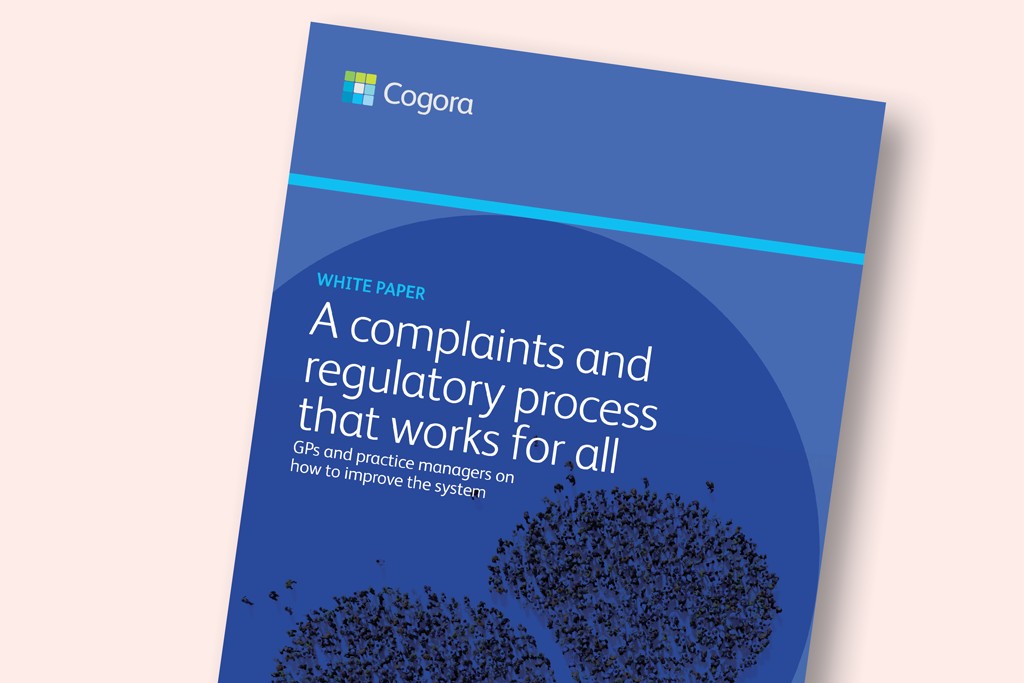
A recent white paper by Cogora, the publishers of GDPUK, on patient complaints in general medical practice highlighted the stress regulation can place in the profession. Dr Len D’Cruz, head of indemnity at the BDA, says many of these concerns are apparent in dentistry
In many ways you might expect the type of complaints received by our general medical practitioner colleagues to mirror those received by dental practices. They are the same patients after all, it’s a primary care environment, NHS services are being offered and there is a finite amount of capacity in the system. And, in both professions, complaints are on the increase.
A white paper by Cogora, the publishers of GDPUK, looks at the issue in great detail. It found that a lot of complaints in medical practice contain unrealistic expectations, such as a demand to see their own GP on the same day, perhaps as a result of a growing societal blame culture or politicians overpromising on what general practice can deliver. There are also a significant number of complaints around wider NHS failings or secondary care waiting lists that land on a GP’s desk. These types of complaints are not so commonly directed at dentists.
The biggest difference, however, is that patients are paying money for the privilege of accessing both NHS and private dental services. Since the NHS dental contract allows patients to have both NHS and private treatment, even on the same tooth, there is plenty of scope for misunderstanding about costs, availability or comparison between NHS and private care.
The now well-established access problem patients face trying to obtain dental care across the UK, exacerbated in areas like coastal towns and ‘dental deserts’, drives patients to private care - both episodic, to access emergency care, and regular, routine care. Inevitably, where those two payment models meet in that crumple zone, the first casualty is often communication and information, leading to misunderstanding and complaints.
The Dental Complaints Service, which deals with private dental care, highlighted in 2024 a 133% rise in complaints in the year between 2023 and 2024.
The Cogora white paper highlighted the influence of AI, which ‘lowers the threshold for what patients will complain about’. It results in longer letters of complaint, more complexity and even more time spent responding to them. The same is true of general dental practice. While AI can be seen as a way of democratising patient access to redress, particularly where English is not a first language or the patient’s education level creates additional barriers, AI complaints in dentistry often weaponise the GDC as a threat to get faster resolution.
The white paper reflects a similar concern about the regulator that dentists have: ‘For the majority of GPs across the UK, the biggest fears around complaints is an escalation to the GMC or litigation. GPs told us the fear of a letter from the GMC, or indeed from a medical negligence lawyer, was always there and was leading them to practise defensively.’
GDC has improved some of its processes, making them more efficient, there are still outrageously longtime lags - 78 weeks at the assessment stage in 2025 - which add to the stress and anxiety of registrants under investigation.
Worryingly, the latest GDC fitness-to-practise statistics show an increase in complaints to the GDC in 2025, up by 23% over the 2024 figures. The rise was particularly marked among dental care professionals, with concerns relating to dentists increasing by 21% and concerns relating to dental care professionals rising by 45%.
The threat of complaints and investigation leads GPs to defensive medicine, where they are more inclined to ‘prescribe certain medications, refer or spend more time writing notes’. Dentists face the same pressures and triggers, and defensive dentistry results in decisions not to carry out treatment that has a poorer prognosis leading to, for example, extraction rather than restoration, referral for oral surgery that might well be within the skill set of the GDP, and the avoidance of more invasive options.
General dentists can sympathise with a GP in the white paper saying: ‘I find myself writing essays in patient notes to make sure I’ve covered my own back, safety-netted clearly. This, combined with patient attitudes, has made working in the NHS almost untenable in the current climate.’
For dentists, the remuneration system, particularly the UDA-based system in England, continues to drive dentists out of the NHS into devoting proportionally more of their clinical time to private dentistry.
The white paper looks at proposals to improve the complaints system for everyone. Complaints, while obviously unwelcome for the recipient practitioner, do provide some learning. The complaints process should be easy to navigate, be responsive and help the practice to learn. For dentists there is a commercial imperative as well, since good complaints handling, or preventing them in the first place, builds trust and ultimately contributes to the bottom line when patients stay, encourage others to join and feel supported by the practice when things go wrong, as they sometimes do.
Dr Len D’Cruz is head of indemnity at the British Dental Association