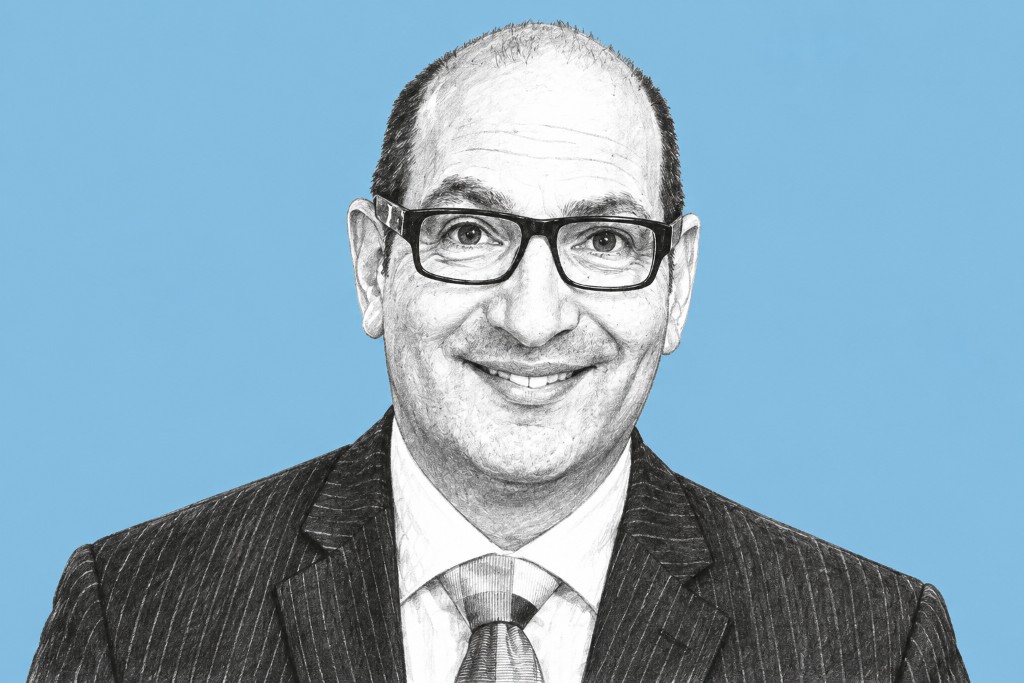
Dr Tony Jacobs argues that there might be a better model than the practice owner/associate relationship, as GDPUK enters its next phase
Ever since the heavens and the earth were created - or, perhaps more accurately for dentistry, since 1948 - there has been a persistent story whispered on the lips of UK dentists: is the role of the Associate doomed?
For as long as most of us can remember, predictions of the demise of this curious hybrid role have surfaced with remarkable regularity. Traditionally passed down as ‘self‑employment’, yet never quite satisfying the full list of conditions demanded by HMRC, the associateship has always lived in a legal and philosophical grey zone. Again and again, tipsters, advisors, and commentators have cast their spells, declaring that change is inevitable and the model will soon be banished to the wilderness. And yet, this column is not here to echo those claims - because so far, they have all been wrong. Repeatedly.
Despite the warnings, the arrangement between practice owners and associates remains the most common and effective method for building, scaling, and ultimately monetising a dental practice. It persists not because it is perfect, but because it is flexible, familiar, and – crucially - functional for both parties. Owners can grow capacity without relinquishing control, while associates gain access to patients, premises, and infrastructure without carrying the full burden of ownership risk.
That said, I often wonder why an alternative model has never truly gained traction - one that arguably offers clearer incentives for the non‑owning party to work harder and think longer term: renting a surgery.
There are colleagues who have quietly built impressive property-led dental portfolios by purchasing freehold practices and then delegating the day‑to‑day operational headache to others. In this arrangement, the building - and effectively the goodwill of that micro‑practice - is rented to a colleague, possibly a more junior one, who takes responsibility for clinical performance and patient growth. The owner takes the risk that the practice may dwindle over time but also accepts the converse possibility; that the renting dentist thrives spectacularly. The reward for the landlord is a steady, predictable rental income without the constant grind of micro‑managing the sub-managers, local and regional.
In this model, the landlord’s business evolves. It becomes less about dentistry and more about identifying the next suitable freehold building, acquiring it, and setting it up to be occupied by another clinician-operator. The clinical risk transfers downwards; the property and strategy risk move upwards.
This rental approach can also work particularly well for specialists looking to establish themselves. It offers a fully equipped room, ready access to shared services, and the option of working with or without directly employing a dental nurse. The owner provides the physical infrastructure: the surgery, the shared facilities, the practice management software, and the front‑ and back‑office teams. Unsurprisingly, the rent may be higher - but it aligns neatly with the modern ethos of maximising use of space by ‘cramming the building’ with specialists. Each clinician cross‑refers to the other, while the practice benefits from the kudos of advertising in‑house orthodontists, implantologists, or endodontists.
From a patient perspective, this can feel seamless and even premium. From a business perspective, it may represent a cleaner and more transparent relationship than the traditional associateship - less semantic gymnastics around employment status, and clearer lines of responsibility.
So the question remains; which side of the fence would you prefer to be on? Would you be better off renting - focused purely on clinical output and personal income? Or being the landlord, enjoying fewer daily headaches, albeit with the occasional ache that inevitably accompanies ownership?
As ever in dentistry, there is no single answer - but it is a question worth asking more often than we do.
=====
I am grateful to Cogora Group for providing a new home for GDPUK. This is a personal statement; I founded GDPUK in 1997 initially as an email list. Remarkably this coincided, that autumn, with the launches of both Google and Facebook. Whilst they were developing algorithms using their PhDs in computer science, I was in my practice using my dental degree to see patients during the day, working on the nascent idea at night.
It feels so positive to see the GDPUK concept, incubated in Manchester, mature over several decades, and now develop into a more professional, journalistic publication. Readers across the profession all want to see GDPUK remain connected to the grassroots of the modern general dental world, become more successful, then in turn, reach further into the profession.
I truly hope we can achieve this, and I remain proud to be part of the new GDPUK as a blogger and adviser.
As always, I sincerely thank the readers, subscribers, contributors, advertisers and the team that ran the old GDPUK – you made it what it was. But looking forward, I hope we can make the GDPUK platform better and achieve more, as a servant for the profession.