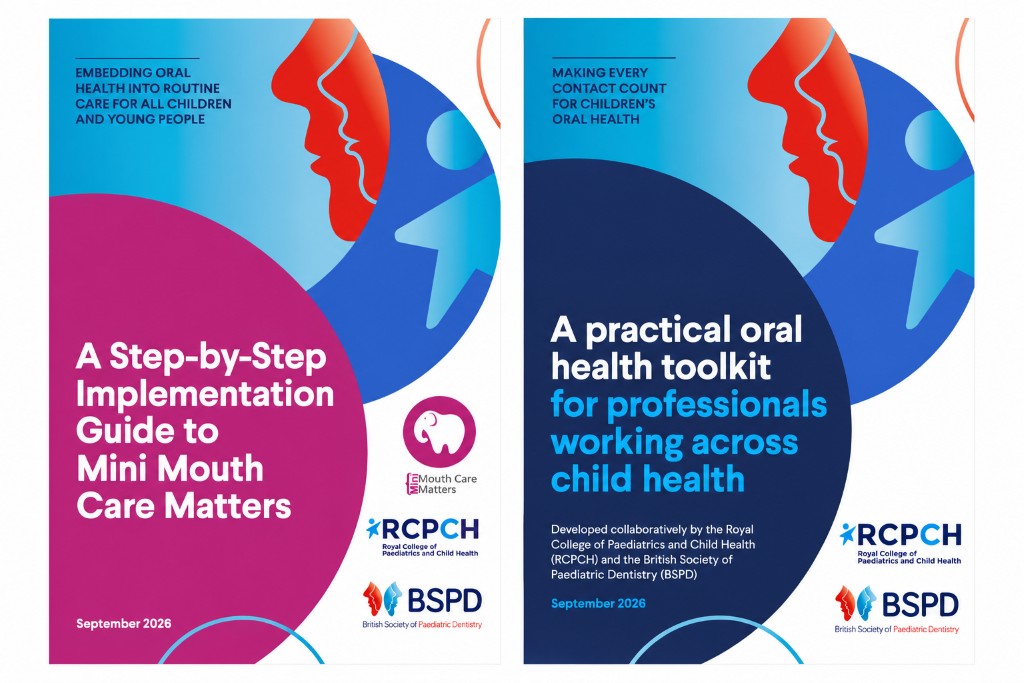
The British Society of Paediatric Dentistry (BSPD) and Royal College of Paediatrics and Child Health (RCPCH) have teamed up to launch a children’s oral health toolkit designed for non-dental professionals.
The kit’s intended users include GPs, health visitors, school nurses, paediatricians, community teams, social care professionals and staff working in early years and education.
It contains evidence on children’s oral health alongside practical tools and strategies for incorporating oral health into routine care.
An accompanying implementation guide sets out a four-step ‘Ask, Look, Rate, Signpost’ approach for professionals working in primary care, health visiting, school nursing, community paediatrics, social care, early years and specialist outpatient settings.
A fuller eight-step framework is included for paediatric wards and hospices.
There are also tools for special educational settings and professionals working with looked-after children, children attending Complications of Excess Weight clinics and other high-risk groups.
Patient-facing materials include a dental passport, social stories and Widgit symbol-supported guidance.
A Mini Mouth Care Matters e-learning module for staff is also available through the NHS Learning Hub and e-Learning for Healthcare.
Dr Oosh Devalia, past president of the BSPD, highlighted the implementation guide as a ‘crucial’ feature.
She said: ‘This will help “lift the toolkit off the page” and make it straightforward for paediatricians and other child health professionals, whatever their specialty, to look into their patients’ mouths with confidence and treat the whole child.’
Dr Helen Stewart, RCPCH officer for health improvement, said the aim of the toolkit was to bring evidence together in a ‘practical, accessible way’ to support professionals across child health.
She added: ‘Paediatricians are acutely aware of the importance of helping to protect children’s oral health.
‘A growing body of evidence shows the effectiveness of brief oral health interventions delivered by non-dental professionals, supervised toothbrushing programmes, and integrated care models.’
The BSPD and RCPCH stressed that the toolkit does not constitute clinical guidance or mandatory standards of care and is intended to complement existing guidance, professional judgement and local pathways.
The launch follows the publishing of RCPCH’s State of Child Health 2026 report, which identified oral health as one of 12 indicators where progress on children’s health had stalled.