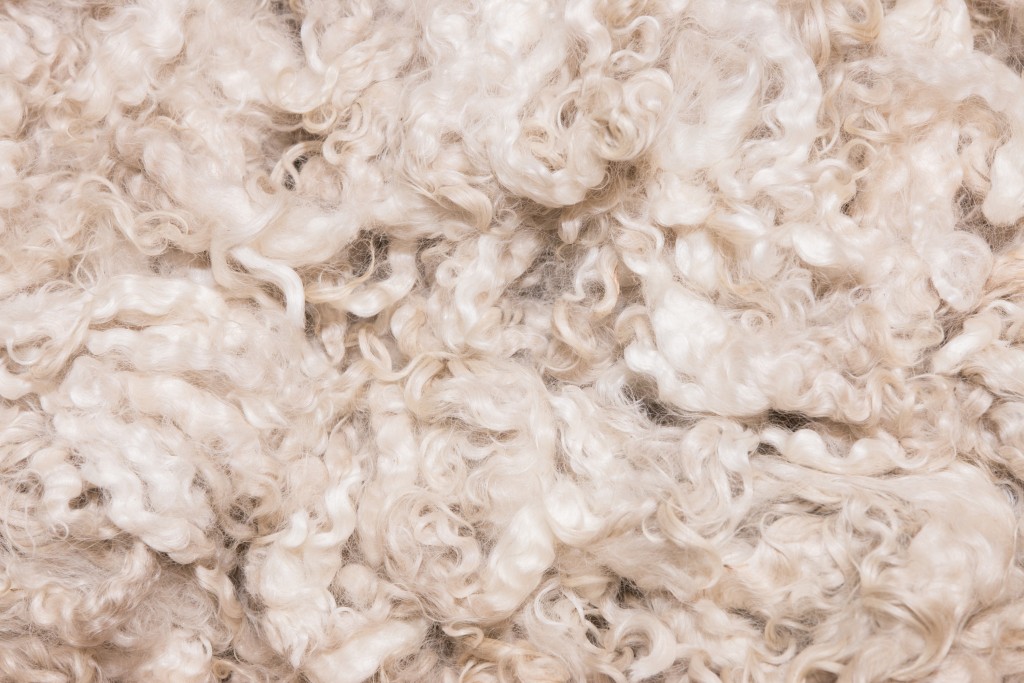
A King’s College London (KCL) spinout company has secured investment to develop a tooth enamel repair material based on keratin – a protein found in sheep’s wool as well as hair and skin.
Eterna Regeneratives aims to incorporate the technology into toothpaste, mouthwash and a professionally applied product, using keratin derived from sheep's wool to support enamel repair.
The company’s co-founder, Dr Sherif Elsharkawy, was senior author of a KCL study published in Advanced Healthcare Materials, in which keratin extracted from wool was found to form a crystal-like layer mimicking natural enamel through interaction with minerals in saliva.
Over time, the layer attracted calcium and phosphate ions, helping to rebuild a protective coating around the tooth.
The research said that keratin can be derived from hair and skin.
Lead author Sara Gamea said: ‘Not only is [the material] sustainably sourced from biological waste materials like hair and skin, [but] it also eliminates the need for traditional plastic resins, commonly used in restorative dentistry, which are toxic and less durable.’
Dr Elsharkawy said: ‘Enamel doesn’t regenerate naturally. This technology could allow us to restore teeth using the body’s own materials.’
However, the spokesperson told GDPUK that human-derived ingredients raise significant regulatory issues in oral care, so they are now developing a patented biomaterial based on the research using sheep’s wool.
Laboratory testing of the technology found the new, enamel-like layer formed on the tooth surface showed much of the hardness and strength of healthy enamel.
Eterna said it will use the institutional investment, led by Hoxton Ventures, to develop the material further, expanding its research and preparing its first product for market, with the aim of bringing the technology to consumers by early 2027.
New laboratory facilities at the Kadans London Innovation Centre in Canary Wharf will support the work. Eterna is also exploring future applications of its biomaterials in bone repair.
Dr Elsharkawy, who is also the company’s chief scientific officer, said: ‘This investment lets us move from lab-based proof of concept to real-world products at pace.
‘It is a validation of years of research, and a step change in how quickly we can bring this technology to patients.’