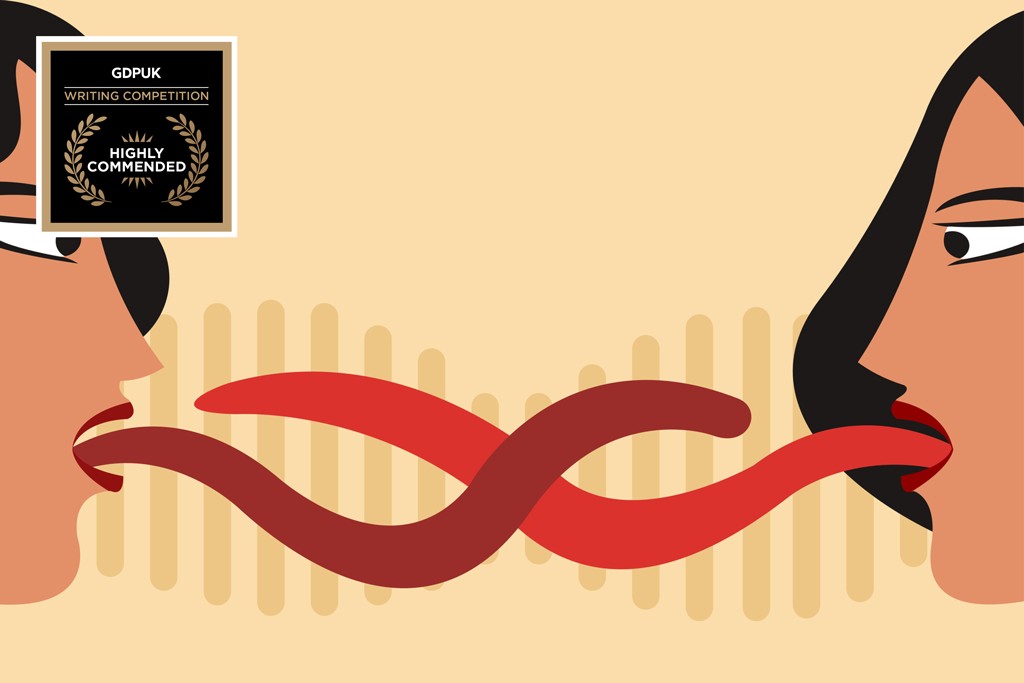
In the second of our highly commended Writing Competition entries, Dr Negin Kamalwand, a dentist in Hampshire, discusses issues around mistrust in the practice
There is a particular kind of silence that falls over a profession after a complaint. Not the patient's silence. The colleagues'.
Everyone in dentistry has a version of this story. A complaint arrives at the GDC, and somewhere along the way, a colleague encouraged it. Not a stranger off the street. Someone who sat across the staffroom, who knew your name, who perhaps knew the patient's history better than they let on. The reasons vary. Sometimes it really is a clinical disagreement. Often it is something far less noble. Jealousy. An old grudge. A practice sale gone sour. A personality that simply rubbed yours the wrong way. Whatever the cause, the outcome is identical: a colleague decided the regulator was the right venue to settle it. Not a conversation. Not even a strongly worded email. The GDC.
We talk endlessly about patient trust. Informed consent, communication, the dentist-patient relationship, all the things they tested us on at university and then again, somehow, every five years since. What we never talk about is colleague trust, and the truth is, it is the more fragile of the two. Patients rarely understand the clinical detail well enough to weaponise it. Colleagues do. They know exactly which words will land, which records will be requested, which three years of your life will be quietly rearranged around a hearing room.
And here is the part that should make us uncomfortable. The GDC exists to protect patients and regulate the profession. Said plainly, that sentence positions dentists as the risk and the public as the thing being protected from us. Most of the time this framing is invisible, just the wallpaper of being regulated. But when the person who set that machinery in motion against you was not a member of the public at all, but one of us, the wallpaper becomes the whole room. The profession is not only regulated as a potential threat to the population. In places, it is policed from within by people wearing the same scrub colours, who know your coffee order.
If we are serious about saving dentistry, this is where the work actually is. Not in another consultation document on contract reform, though that matters too. Not in another wellbeing webinar, gentle as they are. The work is in looking honestly at a culture where the fastest way to deal with a colleague you dislike, distrust, or simply envy is to point them at the one body whose entire branding is built on protecting people from us.
I am not arguing the GDC should not exist, or that genuine concerns should go unreported. I am arguing we have built, almost without noticing, a profession where fear runs in two directions at once. Outward, toward patients, in the form of defensive dentistry, over treating, over recording, over explaining, because every interaction might one day become evidence. And inward, toward each other, because the colleague most likely to report you is rarely a stranger. They already have your number, your weak spots, and the group chat where you all used to laugh about something else entirely.
Saving dentistry will not come from a single policy change. It will come from dentists deciding, individually and then collectively, that the staffroom is not a tribunal, and that disagreement, dislike, even legitimate concern about a colleague, has paths that do not begin and end with the GDC's letterhead. Until that shifts, every conversation about defensive dentistry is treating the symptom. The disease is what we have allowed ourselves to become to each other.
Our Writing Competition hub page will feature all the winners and highly commended entries. Keep checking the page for updates